


MES system
Collecting production data, booking work and tracking machines.
- An MES chosen to fit the size of your production
- Terminals or tablets on the shop floor
- Work and scrap booked without paper
- Machine connections where it makes sense
An MES collects data straight from production, meaning what is being made, on which machine and how late. We connect it to your ERP and every morning build an overview from both, with an AI summary of which orders are running late and why. It also shows missing data, so you know what to fix first.
Until shop floor data is in the system, planning runs on memory and the phone.
The planner keeps the plan in a spreadsheet only he understands. When he is off sick, production runs from memory.
Sales calls the shop floor to ask whether an order will make its deadline. The answer depends on who picks up.
Completed work and scrap are written down by hand and reach the system late, or never.
By the time the production numbers are added up, it is too late to decide.
We start where it hurts most. Sometimes that is an MES on the shop floor, sometimes just a plan connected to the ERP.
Collecting production data, booking work and tracking machines.
A plan tied to orders, capacity and material.
ERP and shop floor data in one overview every morning.
For a print shop we built its own production management application, connected to ABRA Flexi. It replaced Excel, e-mails and agreeing details at the machine, so sales and the workshop now work on the same data.
The salesperson and the foreman see the order status at the same moment.
A print shop runs its orders in its own application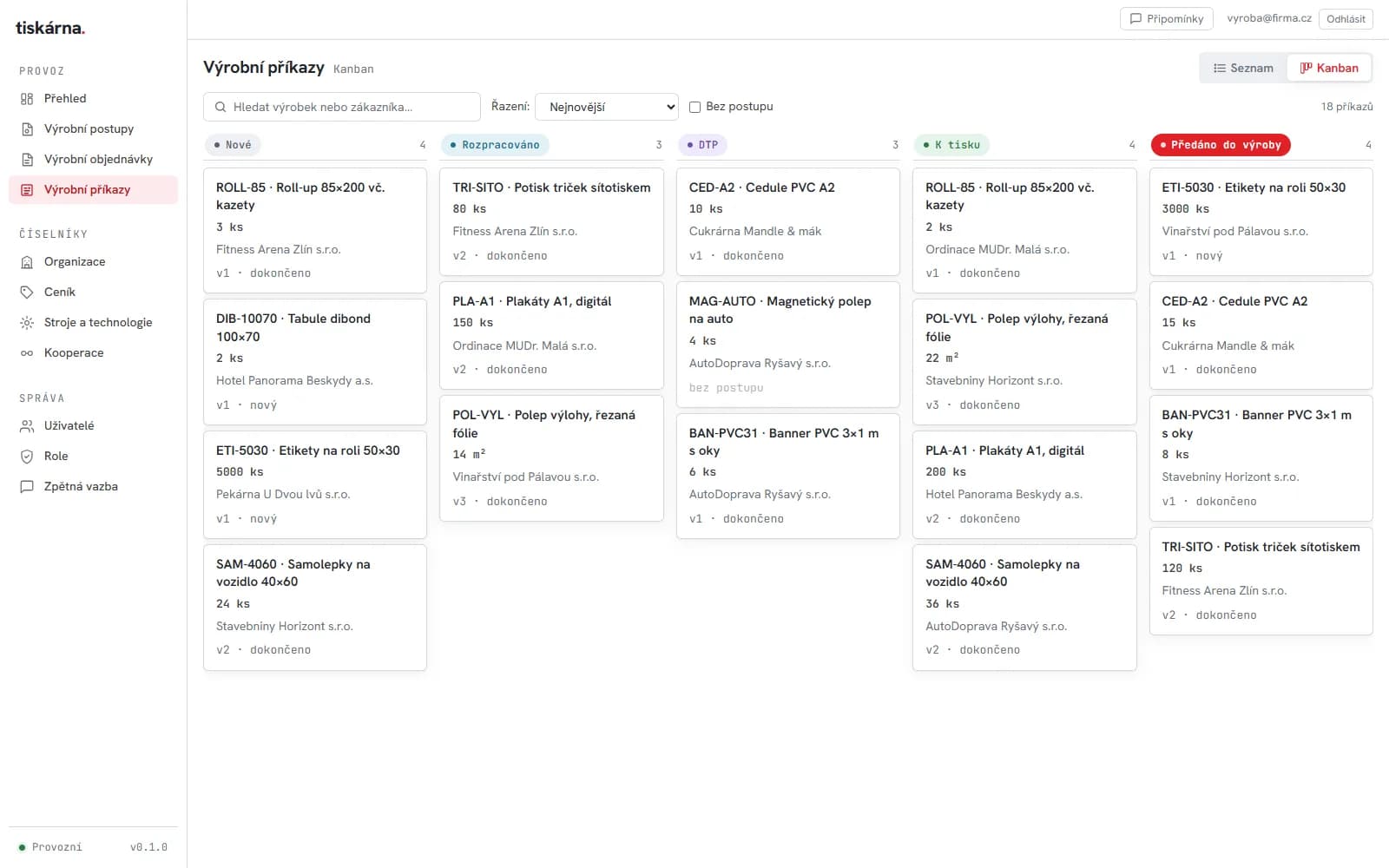
Every morning the foreman goes through the night shift data machine by machine to find where production stopped. Orders, standard times and bills of materials must be complete in the ERP, otherwise neither the MES nor AI can work out a delay.
From the MES data, AI writes a few sentences on what was made during the shift, where a machine stood still and why.
The report lists machines with no reports and orders without standard times on its own. AI flags times that make no sense and looks up the foreman notes on them.
The report calculates deviations from standard times on its own. For operations where the standard is consistently missed, AI looks up production notes and suggests possible causes.
When a salesperson asks, AI looks up the order status and drafts a reply with the date from the plan.
Not sure where to start? AI readiness test
Tell us where you keep the plan and how data from the shop floor reaches you. We will come back with a proposal for the first step.