


One record instead of Excel, the website and a paper job sheet
An order existed in parallel in Excel, on the website and on a handwritten note in shipping. We built a single record in Tabidoo covering stock, orders and shipping, connected the e-shop and accounting, and roughly halved the admin work around each order.

- Tolik dnes zabere administrativa kolem jedné objednávky. Dřív to bylo dvacet až třicet minut.
- 12 až 15 minut
- Tolik ubylo chyb ve výdeji materiálu.
- zhruba o 50 %
What was blocking growth.
Ten people worked in the workshop, but orders flowed through three incompatible places. The customer submitted a request through the website, the assistant manually retyped it into a shared Excel file, the foreman printed out the list for the next day in the evening and used a pen to add changes to the paper job sheet that went with the product to shipping. Each order therefore existed in parallel in four forms and none of them was fully up to date.
Daily this meant two to three hours of the owner and the assistant spent retyping between systems and tracking down where a given piece was. If a customer called and wanted to change a deadline or adjust a specification, finding the order took roughly ten to fifteen minutes, because nobody knew whether the website, Excel, or the paper on the shop floor was valid. Material stock was checked by eye, so two to three times a month it happened that material was missing for an order already in progress.
Shipping was a discipline of its own. The packer had to copy the address, contact phone number and weight from the paper job sheet into the accounting software and into the carrier portal separately. For smaller orders this was almost half of the total processing time. During the rush before Christmas it demonstrably happened that the wrong piece went to the wrong address, because two similar orders had their paper job sheets side by side.
The owner recognised that the existing chaos would not let the company take on more orders, even if the workshop had the capacity. People were tied up with admin, not production. He was looking for a solution that a family workshop could handle without its own IT person and that matched a ten-person company in size and cost, not a corporation.
Objednávky
Najít stav objednávky pro zákazníka trvalo deset až patnáct minut.
Sklad
Chybějící materiál zastavil rozjetou zakázku.
Kapacita
Dílna měla volné ruce, administrativa ale další zakázky nepustila.
From audit to controllable operation.
What we did
- Audit
- Document workflow
- System integration
- Support and care
We started with a three-day audit directly in the workshop. We walked the order path from the request on the website all the way to handover to the carrier and marked every place where data is retyped by hand. It came out to seven retypings for a single order. For a company of ten people with atypical small batches, neither custom development nor a full ERP made sense. We chose Tabidoo, a low-code platform where you can assemble tables, relations and workflows without programming and where the license matches the size of the company, not a corporate ERP.
In Tabidoo we built three connected records: orders (one entry from website to shipping), material stock (with minimum levels and automatic alerts) and shipping (with label printing and handover to the carrier portal). We connected it to the e-shop through an API, so the order drops straight into Tabidoo without manual retyping. For the accounting software we set up an automatic invoice export once a day.
Specifically, we deployed and connected:
- Tabidoo as the single source of truth about order, material and shipping status
- An API integration with the e-shop (a new order drops in automatically)
- An API integration with the accounting software (daily export of finished orders for invoicing)
- A connection to the carrier through an existing connector (the label is generated from the order card)
- A mobile view for the foreman, who handles production from a phone on the shop floor
After deployment we stayed on for support, two hours a month tuning the workflow as the company learns to work with the system. No major rebuilds, just minor adjustments to forms and reports.
Measurable shift.
Admin work around one order dropped from twenty to thirty minutes to roughly twelve to fifteen. Daily this means the owner and the assistant save over an hour they previously spent retyping. Errors in material issuing dropped by roughly half, because stock shows the real status and the workflow will not let an order start without confirmed supply. Before the Christmas season twice the volume of orders went through without a single mix-up in shipping.
We continue with the company in support mode, two hours a month. We tune forms based on what has proven itself in operation and gradually add reports for the owner (how many orders are in progress, where production is stuck, what the margin is on standard products). The client manages the system on their own, we only handle things that low-code cannot cover.
The freed-up capacity of the owner and the assistant went in two directions. The assistant now has time to call customers and actively offer add-on products, which was not possible before. The owner took on two new larger orders for which he previously had no admin room, and is considering expanding the workshop by one workstation. The company grows from new revenue, not from greater workload on the current team.

AI agenti v naší firmě: rutinu dělají stroje, rozhodují lidé
Případová studie, kterou píšeme sami na sobě. Agenti jsou napojení na obchod, vývoj i servis a berou si rutinu. Lidé drží směr, schvalují a ručí za výsledek.
Read the case study
Five systems in one rhythm for a growing SaaS company
Sales in Pipedrive, projects in ClickUp, invoices in Fakturoid, accounting in Xero and documents in wFlow. Five good tools, with everything rewritten by hand between them. We built a custom integration that syncs them daily, so a deal moves from signed contract to invoice without any retyping.
Read the case study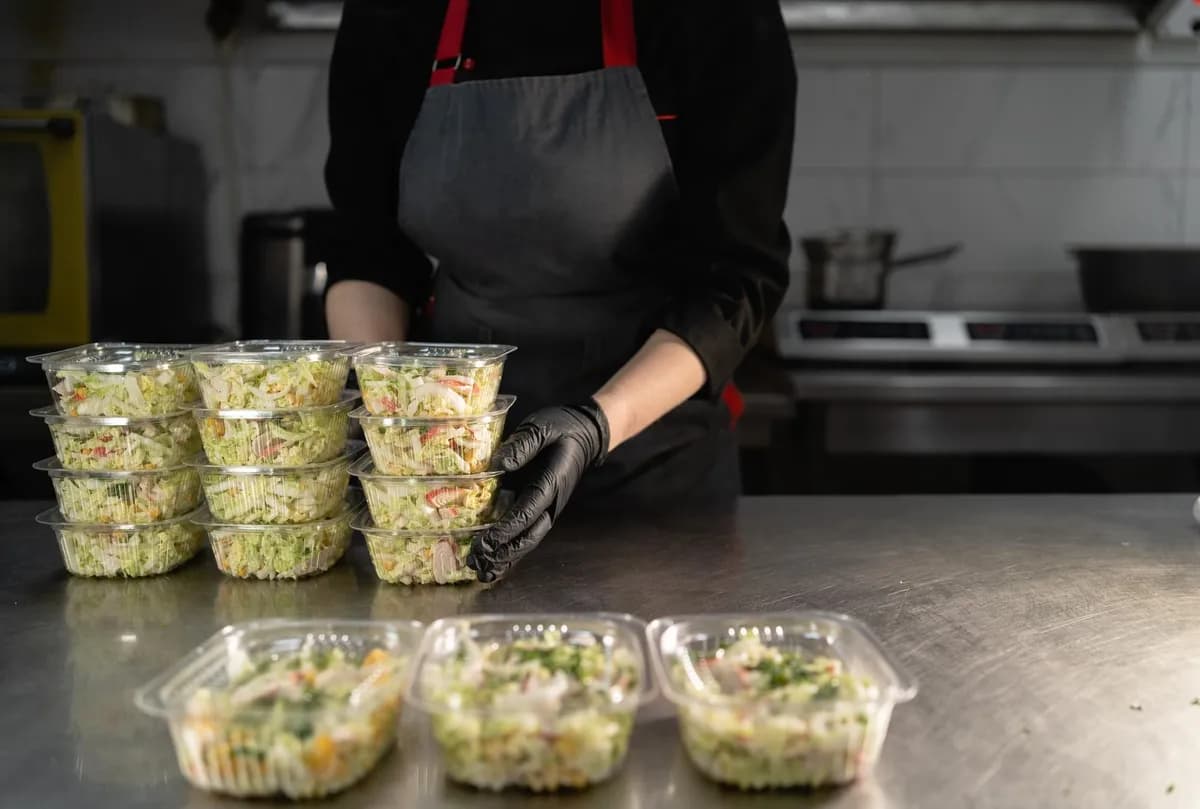
B2B ordering app for corporate catering
Weekly orders came in by email and phone, allergens were rewritten by hand and dispatch made 5 to 10 mistakes a month. We built a custom B2B ordering app for 30+ corporate clients with data on portions, allergens and menu variants, so preparing the week dropped from half a day to one hour.
Read the case study
Are you facing something similar?
We will walk through your operation, show where the biggest impact is, and agree on a next step.